

Wool Pellets for Gardening: A Natural Fertilizer Guide
A few years ago, we had a problem. Every shearing season, we'd end up with a pile of wool that wasn't quite good enough to sell — short bits, leftover pieces, fleeces from the previous year that hadn't moved, fleeces too full of vegetable matter to process into product. On a sustainable farm, waste isn't an option. Everything has to earn its place.
We'd always known that wool was good for the soil. We'd tossed raw fleeces around blueberry bushes, layered scraps into raised beds, used bits of wool as mulch. It worked — the plants loved it. But raw wool was messy, hard to distribute evenly, and weeds sometimes grew right through it. When wire grass grows through it, oh my!
The solution turned out to be pelletizing the wool. Compressed into small, dense pellets, the same wool that protects our sheep from the elements now feeds gardens, retains moisture in soil, and breaks down into pure organic matter. Here's everything we've learned about using wool pellets in the garden.
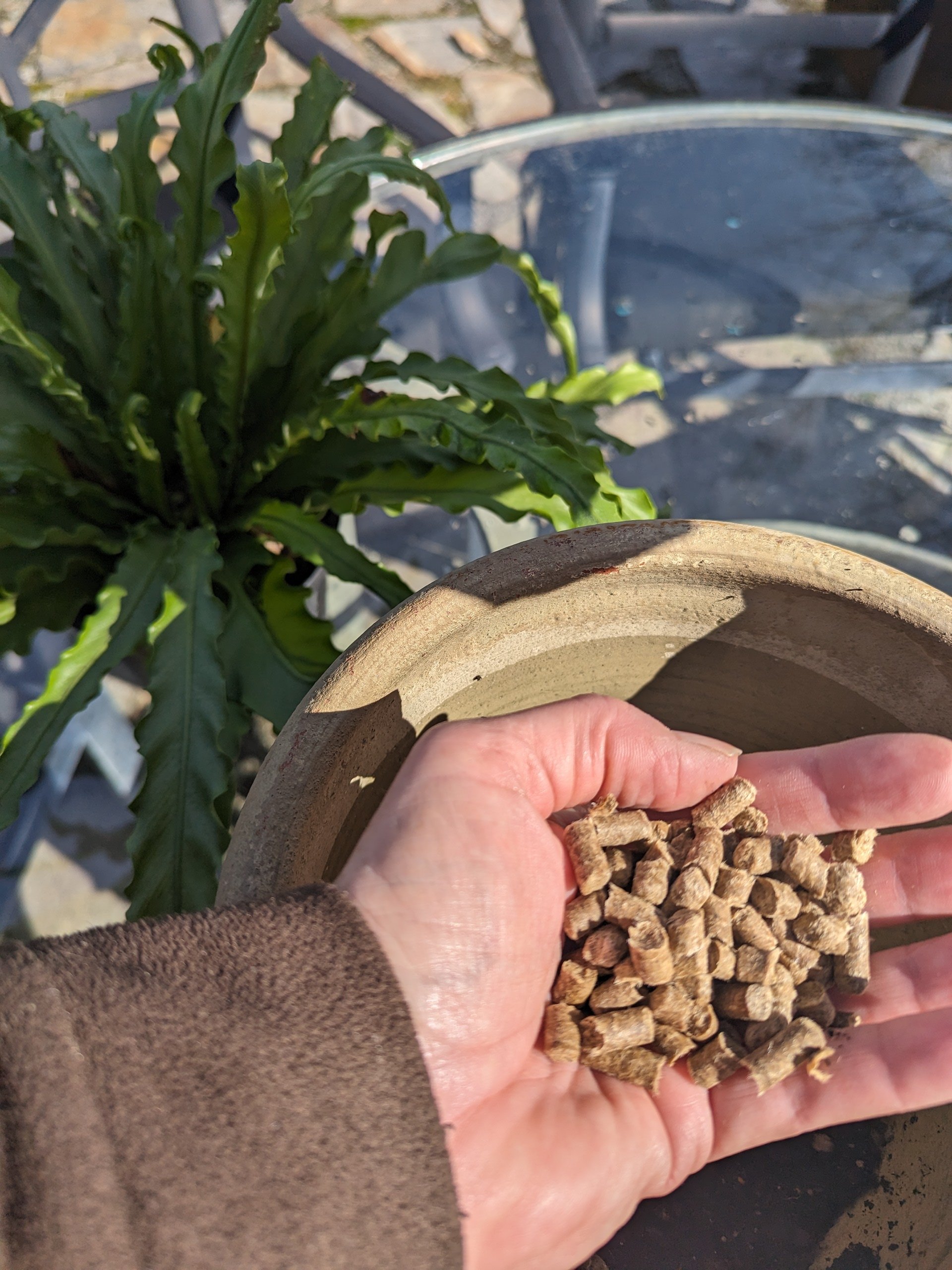
pellets made from wool discard
What wool pellets are
Wool pellets are exactly what they sound like: sheep's wool compressed into small, dense pellets roughly the size of rabbit food. Ours are made from 100% wool — nothing else, except whatever trace vegetable matter or manure was naturally present in the fleece, which is just added nutrient to the plants and soil.
When you add wool pellets to soil and water them in, they absorb moisture and slowly expand. Over the course of several months, they break down completely, releasing nutrients into the soil and improving its structure as they decompose. By the end of a growing season, they've become part of the earth.
Why put wool in your soil
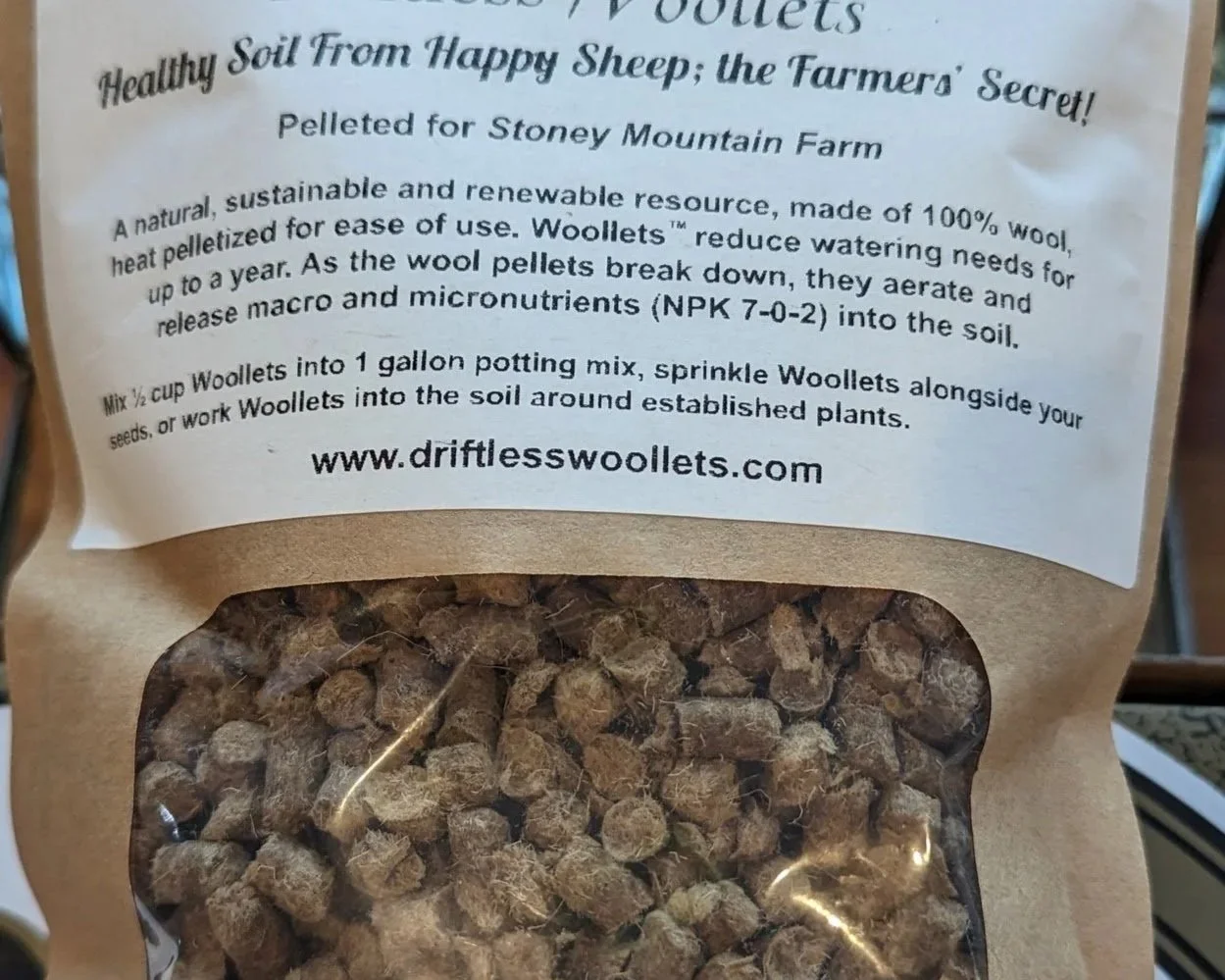
wool pellets nutrient list
Wool pellets do three things at once, which is what makes them more useful than most single-purpose amendments.
Slow-release fertilizer. Wool has a natural NPK value of approximately 9-0-2 — high in nitrogen, with potassium and trace amounts of calcium, magnesium, iron, and sulfur. Unlike synthetic fertilizers that deliver a nutrient spike and then wash away, wool breaks down slowly as soil microorganisms digest the fibers. This gives your plants a steady feed over four to six months, which is how plants actually prefer to receive nutrition.
Water retention. Wool can hold around 20 to 30 percent of its weight in water. In the soil, pellets act like tiny reservoirs — absorbing moisture when you water and releasing it slowly as the surrounding soil dries out. This is especially valuable in sandy soils that drain quickly, in raised beds that dry out faster than in-ground gardens, and for container plants that can't draw moisture from deeper earth.
Soil structure improvement. As wool pellets expand and eventually decompose, they create air pockets in the soil. This improves porosity, which means better root development and healthier soil biology. The effect is similar to adding perlite or peat moss, but wool is renewable, biodegradable, and doesn't need to be mined from a bog.
How to use wool pellets
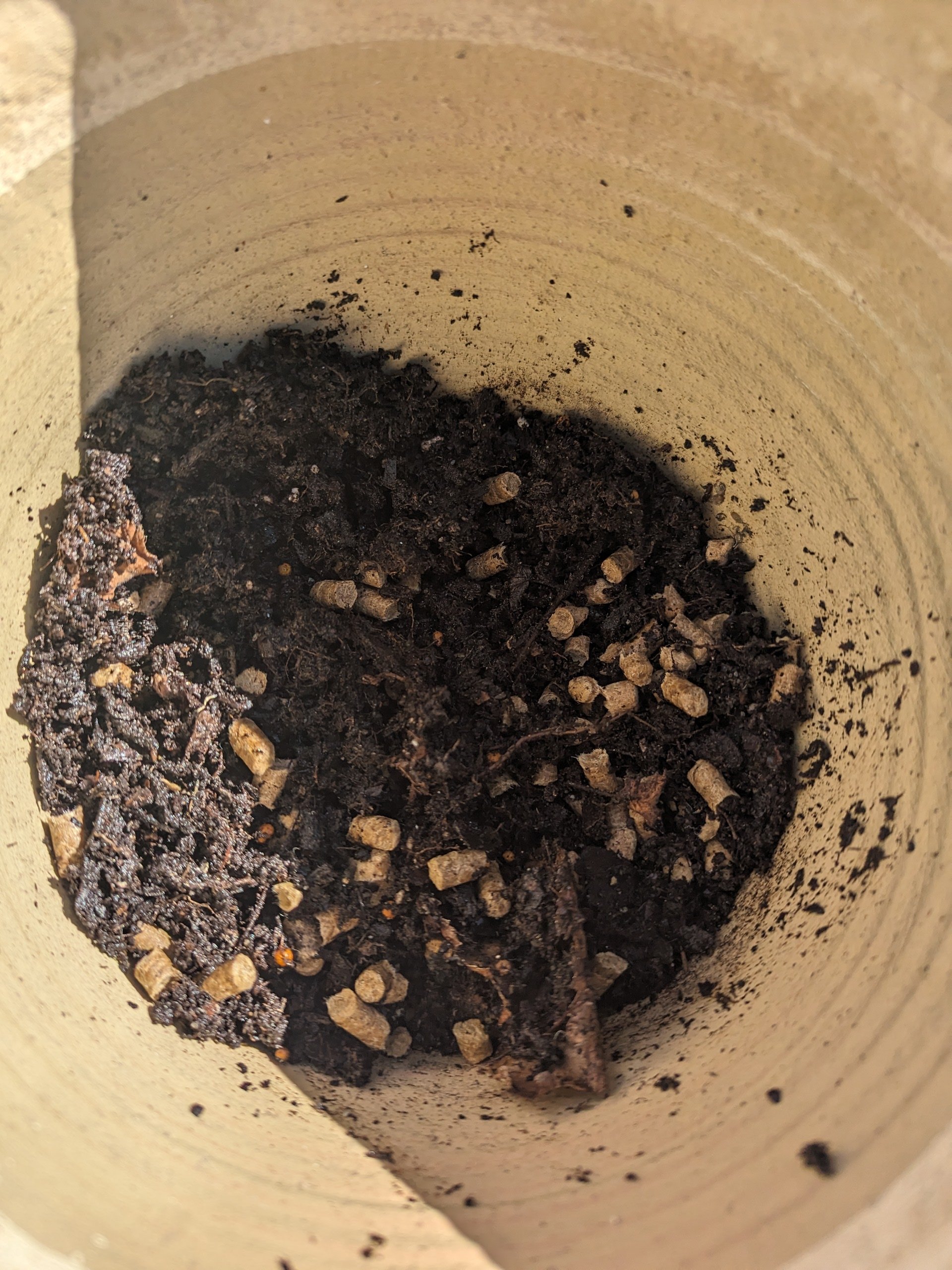
wool pellets mixed with soil
The beauty of wool pellets is that they're hard to get wrong. You can't really over-apply them — worst case, you've added extra organic matter that'll break down over a longer period. But here are the rates we use and recommend:
Raised beds and in-ground gardens. Mix about one pound of pellets per 10 square feet of garden bed. Work them into the top few inches of soil before planting, or side-dress around existing plants and cover lightly with soil or mulch. For heavy feeders like tomatoes, squash, cucumbers, and leafy greens, you can go a bit heavier.
Container plants and houseplants. Use roughly half a cup of pellets per gallon of soil. Mix them in when repotting, or for already-potted plants, poke a few pellets into the soil around the root zone with a pencil. They'll expand and do their work over the next several months. For succulents and plants that prefer drier conditions, use half that amount.
Seed starting. Place a single pellet alongside each seed when planting. The pellet will hold moisture around the seed during germination and provide a small dose of nitrogen as the seedling establishes.
Tomato planting trick. When transplanting tomato starts, put a tablespoon of pellets in the hole with the roots. Then lay the stem sideways and place another tablespoon along the buried stem. This encourages a stronger, deeper root system — tomatoes root along any buried stem, and the wool feeds those new roots as they develop.
Top dressing and mulch. You can spread pellets on the soil surface around established plants. They'll absorb rain and irrigation water, slowly releasing it back. Some gardeners report that wool on the soil surface also deters slugs — the fibers irritate their soft bodies as they try to cross.
Wool pellets vs. peat moss
This is the comparison that matters most for gardeners who are trying to make more sustainable choices.
Peat moss has been the go-to soil amendment for decades. It improves moisture retention and soil structure, which sounds a lot like what wool pellets do. But peat has a problem: it comes from ancient bogs that took thousands of years to form, and harvesting it releases stored carbon into the atmosphere. Peat bogs are also critical ecosystems — draining them for horticultural peat destroys habitat that can't be replaced on any human timescale.
Wool pellets do everything peat moss does for home gardeners, but they're renewable on an annual cycle. Sheep grow new fleece every year. The wool we pelletize is material that would otherwise go to waste. And when wool decomposes in your soil, it's returning nutrients that the sheep absorbed from the pasture — it's a closed loop.
The one thing peat does that wool doesn't is lower soil pH. If you're growing blueberries or other acid-loving plants and need to acidify your soil, wool pellets aren't a substitute for that specific purpose. For everything else — moisture retention, slow-release nutrition, soil structure — wool is the better choice.
Wool pellets vs. synthetic fertilizer
Synthetic fertilizers are designed to deliver nutrients fast. They dissolve in water, get taken up by roots immediately, and can produce visible results within days. The tradeoff is that they wash out of the soil just as quickly, which means you need to reapply frequently, and the runoff carries those chemicals into waterways.
Wool pellets work on a completely different timeline. The nutrients are locked in the fiber structure and only become available as soil biology breaks the fibers down. There's no runoff risk, no chemical burn risk, and no need to reapply every few weeks. One application feeds your plants for most of the growing season.
For home gardeners growing food, the difference matters. You're not putting synthetic chemicals into the soil that grows what you eat. You're building soil health that compounds year over year rather than depleting it.
What about the smell?
Let's be honest — wool pellets are made from sheep wool, and sheep wool has a natural scent. When you first open the bag and add the pellets to wet soil, you may notice a mild, earthy, slightly animal smell. It's not strong, and it fades within a day or two as the pellets absorb water and begin breaking down. For outdoor gardens, it's a non-issue. For indoor houseplants, pushing the pellets below the soil surface eliminates any noticeable scent. POV, we could remove that smell if we were willing to use chemicals! NOT happening!
A closed loop from pasture to garden
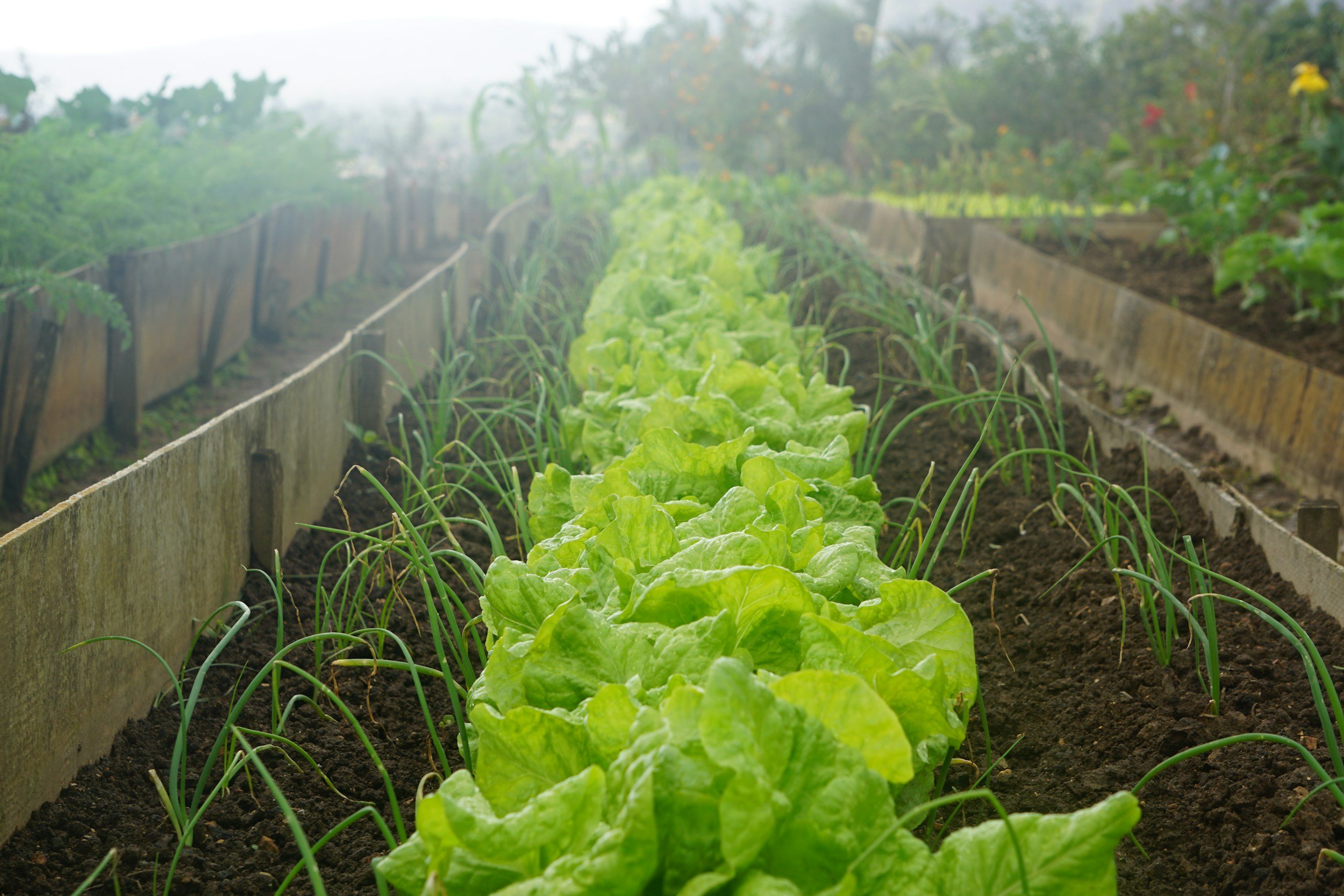
a lush vegetable garden
We think about this product differently than most of what we sell. Our dryer balls, our lip balm, our soap — those come from the best wool and lanolin our sheep produce. The pellets come from what's left over: the bits and pieces, the fleeces too full of vegetable matter, the wool that didn't make the cut for anything else.
On a conventional farm, that material is waste. On our farm, it goes back to the soil — just in someone else's garden instead of our own pasture. The sheep eat the grass, the grass becomes wool, the wool becomes pellets, the pellets feed the soil, and somewhere a tomato plant is a little happier for it.
That's the kind of loop we got into farming to create. Being a sustainable farm is a commitment that we take seriously and we’re proud to say we are constantly learning new ways to stay true to our promise to mother earth!
Our Raw Wool Pellets are made from 100% heritage sheep wool grown on our 56-acre farm in Burlington, North Carolina. No chemicals, no additives — just wool.