

Here at Stoney Mountain Farm, we have officially welcomed in the change of seasons. Out in the pastures, the sheep are deeply content in the crisp November air—and honestly, so are we. It is breeding season for the flock, a quiet and purposeful time of year that reminds us of the steady rhythm of farm life.
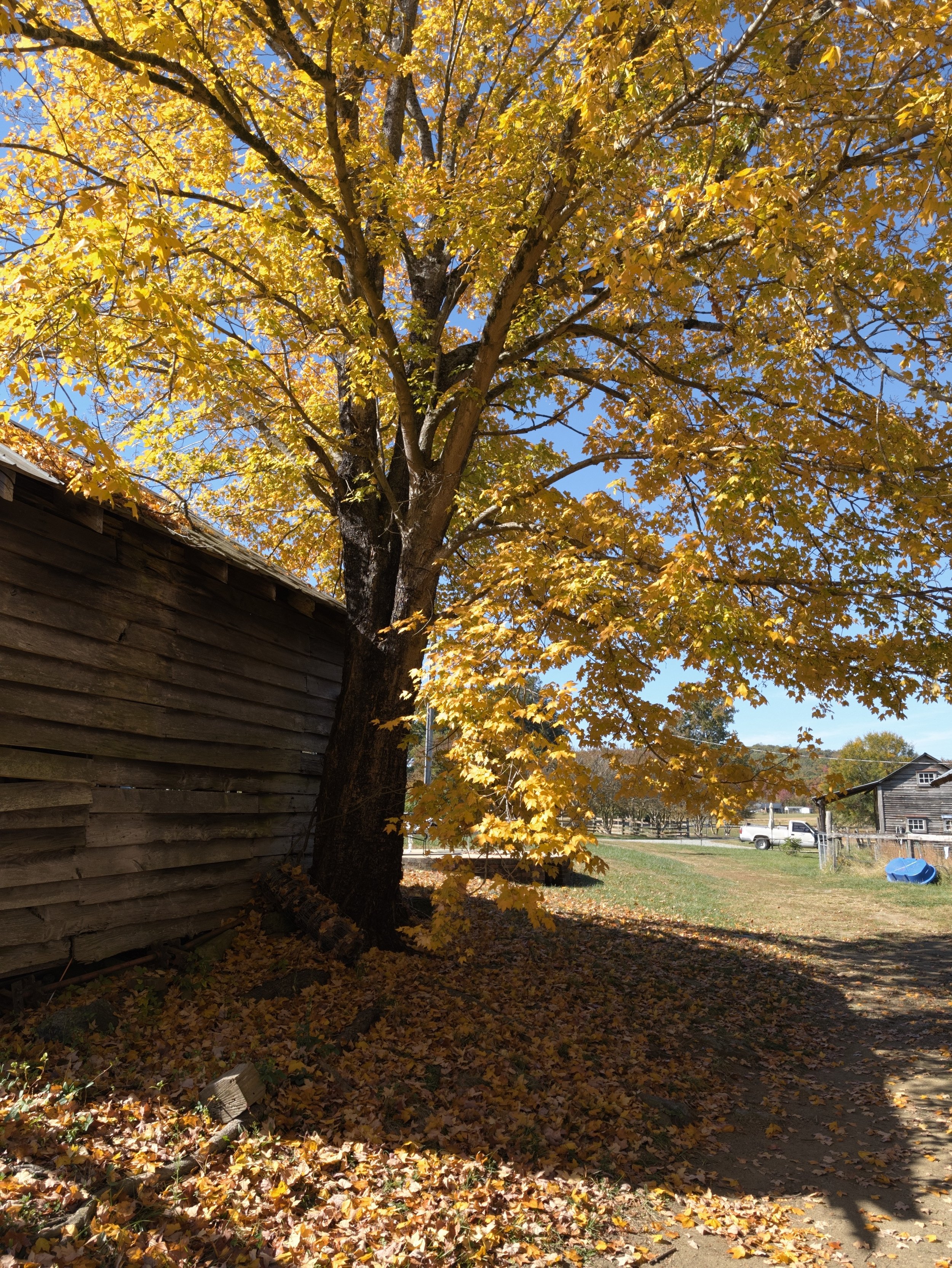
Sugar maple in fall
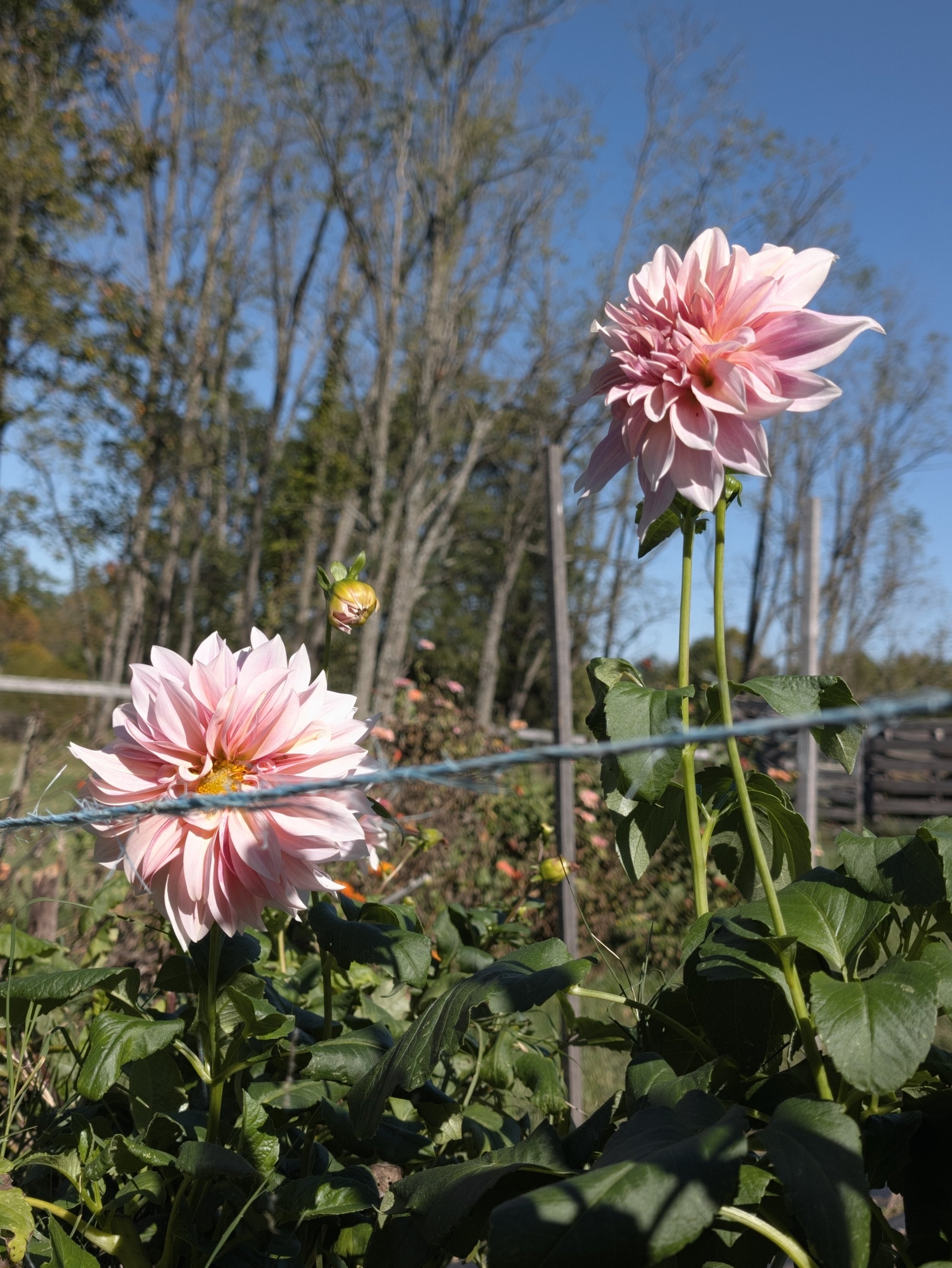
End of season dahlias…
In the garden, the dahlias are slowly fading after a generous run, making room for a different kind of bounty.
Cool-season greens are taking center stage—especially the arugula, bright and peppery in the chill—alongside beds of growing cabbage and crisp radishes. Even the fallen leaves underfoot are a welcome sight around here; rather than rushing to clear them away, we gather them up to feed back into our beds for soil improvement, tucking the earth in for winter.
As November settles in, we find ourselves preparing for the holidays both in our own kitchen and across our farm business. In the Wool House and workshop, our production naturally shifts toward the season of gift-giving. As we pack orders and prepare for holiday sales, I keep coming back to a simple philosophy: why not give a gift that is completely natural, healthy for both the person receiving it and the earth, handmade and truly keeps on giving? Whether it is 100% USA wool dryer balls that replace disposable chemicals in the laundry room for years to come, or rich lanolin skincare crafted from our flock's bounty, thoughtful, sustainable gifts carry the same integrity we value on the land.
That same reverence for doing things the right way carries straight to our Thanksgiving table. Looking ahead to gathering with family and friends, my focus turns to honoring the integrity of the food we share—ingredients grown the way they should be, yielded from healthy, chemical-free soils and raised with care. This year, our menu is a love letter to the Piedmont and the Appalachians:
From our own pastures and garden: We will serve a leg of lamb raised right here on the farm, alongside wild persimmons hand-foraged from our pastures for a traditional persimmon pudding (recipe below). The peppery arugula and sharp, fresh dug horseradish root will come straight from our garden beds. There is something indescribable about the act of growing and/or harvesting what you eat
From our neighbors and local markets: I will shop our local farmers market for the rest of our produce—carrots, onions, and earthy beets, flour for our baked goods, dairy from local dairies and cheese from our favorite cheesemaker—and source our Thanksgiving turkey from a fellow local farm.
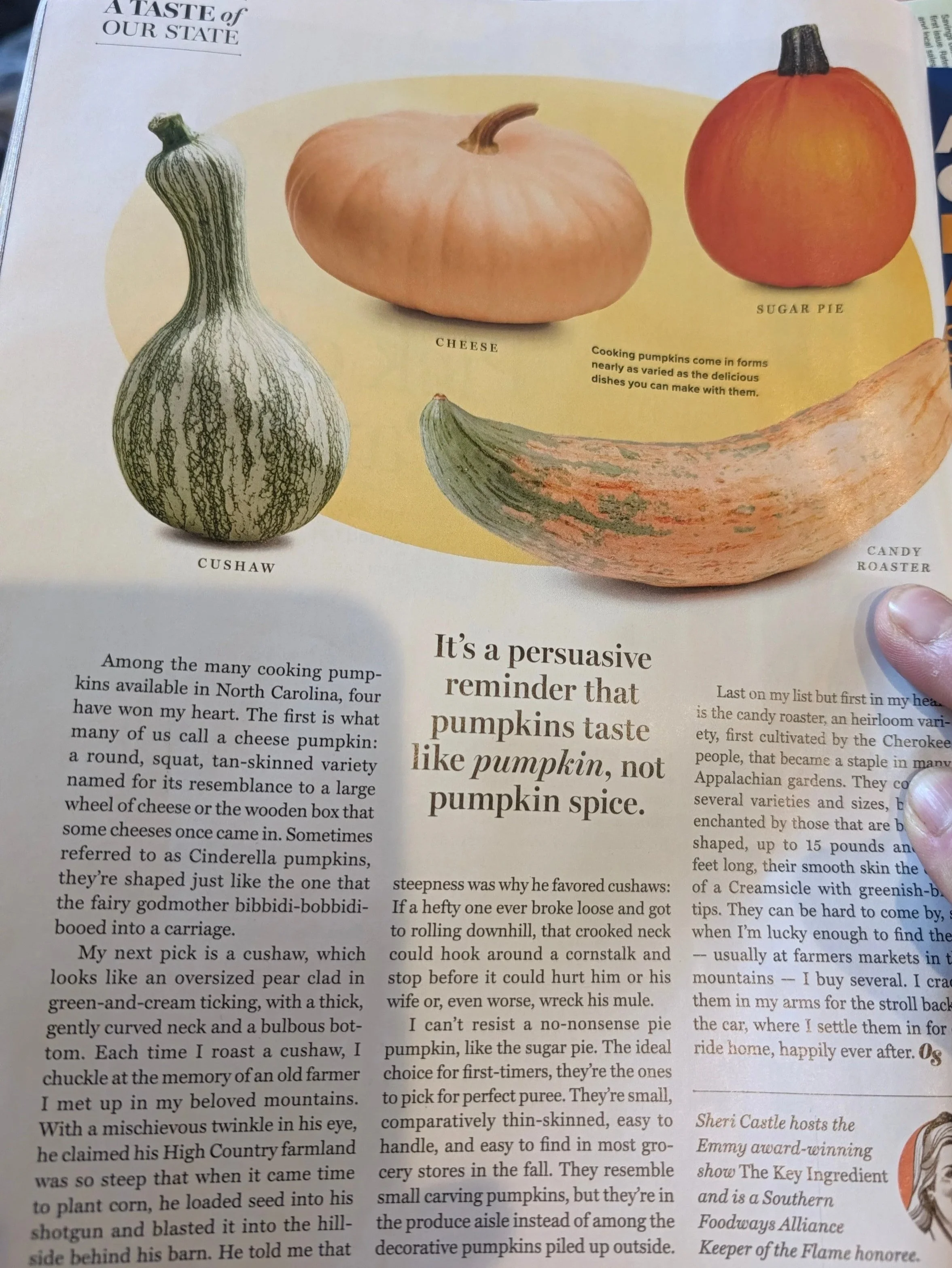
Heirloom varieties: We are baking with Candy Roaster pumpkin, a treasured heritage native seed from the Appalachian Mountains whose sweet, dense flesh makes all the difference from canned pumpkin. The article states, hard to come by….not if you frequent your local farmers markets! Score! They even suggest using less added sugar is called for. Score!
In the kitchen, Thanksgiving always seems to call for us to honor the ways of the past and take no shortcuts. It is the one holiday where slowing down feels not just permissible, but necessary. Instead of reaching for a store-bought jar, I am making my mincemeat from scratch using real beef suet. And of course, the pie crusts will be rolled out from scratch, too—because why not?
Whether it is in the food we put on our table or the gifts we place under the tree, there is a quiet satisfaction in knowing where things come from and choosing goods that nourish rather than deplete.
Bill Smith’s Persimmon Pudding
Ingredients:
1 tablespoon plus 1 stick unsalted butter, at room temperature, divided 3 cups very ripe persimmons 2 cups buttermilk 1 1/2 cups sugar 3 large eggs 1 1/2 cups all purpose flour 1/2 teaspoon salt 1 teaspoon baking powder 1 teaspoon baking soda 1/2 teaspoon freshly grated nutmeg 1/2 teaspoon ground ginger 1 teaspoon cinnamon Whipped cream (optional)
Preheat oven to 350 degrees. Grease a 12-by-8-inch baking pan with 1 tablespoon butter. Use a food mill, sieve or cone strainer to remove the seeds from the persimmons and puree the pulp; it will reduce them from 3 cups to 2 cups. Combine the puree with the buttermilk. Beat the remaining butter and sugar in the bowl of an electric mixer with the paddle attachment until fluffy. Beat in eggs one at a time. Fold in the persimmon puree by hand. Sift the dry ingredients together (flour, salt, baking power, baking soda, nutmeg, ginger and cinnamon) and fold them into the persimmon mixture. Spread the batter in the baking pan. Place the pan in a larger pan and fill halfway up with warm water. Bake, uncovered, for 1¼ hours, or until the pudding is firm at the center, has pulled away from the sides of its pan, and a paring knife inserted into the center of the pudding comes out clean. Serve hot with fresh whipped cream. This keeps well in the refrigerator for 4 to 5 days and reheats beautifully in the oven or microwave.